Monday, 4 September 2017

My visit to Dali University, Yunnan, China, as Visiting Professor... 
Part-1

Origin of this trip:
Mr. Lu Zonglong, one of the research scholars at Mae Fah Luang University, Chiang Rai, Thailand, asked me last year while I was there as a Visiting Professor, whether I would consider a visit to his University for a short duration.... On query, he replied that he comes from Dali University, Yunnan Province, China and his supervisor Prof Hongyan Su, Dean, College of Agriculture & Biotechnology, Dali University, handles a major research project on aquatic fungi of mountain streams of Yunnan Province in south-western China, including the upper Mekong river catchment area. My curiosity naturally rose when he said it is regarding looking at aquatic micro-fungi which is very dear to me...

Preparations:
Mr Zonglong and his mentor at Dali University Prof Su worked out a brief programme and invited me as Visiting Professor to Dali University for a short duration of my choice time. We agreed upon that convenient time would be later half of August 2017. Along with an invitation letter, they sent return travel tickets to me and my wife, the route being Goa-Delhi-Kunming by fight and Kunming-Dali by road. I obtained our travel Visa from Chinese Consulate in New Delhi. 

Our trip to Dali via Kunming:
We set out to Dali, Yunnan, China, on 14th August 2017. We left Goa at 8:30 am, our flights were on time and we reached Kunming airport at 10:30 pm local time. Authorities at both Delhi and Kunming airports were very courteous and helpful. As we came out of the airport in Kunming, Mr. Zonglong received us with an affectionate smile and hug. He accommodated us in a nice place ‘Nissi Holiday Hotel’ in Kunming that night.
At departure lounge, Delhi Indira Gandhi International Airport

Overnight stay in Kunming

Located about 1900 m above sea level, Kunming, the capital of Yunnan Province in south-west of China, is known as the ‘city of eternal cool’ for its pleasant climate and greenery round the year. It was said to be the gateway to ‘silk road’ in early times that facilitated trade with India, Myanmar and beyond. Today it is the provincial modern capital of Yunnan and most popular tourist destination in southwest China.

Road travel from Kunming to Dali:
We got ready early next day. Taking bread-butter, baked beans, fruits and coffee as breakfast in the hotel, along with Mr Zonglong we set out to Dali in a hired car at 9:00 am. Kunming to Dali, 330 km 6-lane highway, was a pleasant drive. Though we had intermittent rain on the way, the car took us to our destination in 4 hours. For my queries, our friend Zonglong gave detailed explanations on places, people and culture of the region. Beautifully landscaped motorway from Kunming to Dali with several well-lit tunnels, it’s picturesque all along! High mountains, valleys and cultivated fields, it is green everywhere. People of north-west of China cultivate predominantly maize along the slopes this time of the year and besides we saw stretches of fruit orchards and pine forests. At intervals along the road, there are gas stations coupled with restaurants and washrooms.
I particularly noticed that the cities of Kunming, Dali and entire stretch of Kunming-Dali highway are absolutely clean. We didn’t see even a piece of paper or plastic littered anywhere on the roadsides, public places and parks. Those washrooms along the motorway were absolutely clean and sparkling...! Such clean places are prerequisites for a good living....
6-lane highway from Kunming to Dali is a high-speed motorway...

 Maize cultivation along the slopes in Yunnan province

Amazing road network in China
  
Roads, crisscrossed by road and rail-flyovers.....
On reaching Dali:
We reached Dali at 1:30 pm local time. Prof. Hongyan Su fondly received us at the entrance of City of Dali and took us straight to a restaurant named ‘84000WAYS’ for lunch. Her research students also joined for lunch. It was a sumptuous vegetarian meal with rice, noodles, curry, mushroom pizza, baked vegetables and an aromatic spicy pumpkin soup. I queried with chief chef on the name of the hotel; she replied that it meant Lord Buddha preaching 84000 ways of attaining peace and enlightenment..... Noble thought indeed! 

With Prof Su (in black) and her research students 

After lunch, we were taken to the place of our stay, a nice accommodation in the proximity of Dali University, where we resided next two weeks... 

D. Jayarama Bhat

(To continue....)

Saturday, 28 January 2017

A brief Report on COEIC-2017 held at Centre of Excellence in Fungal Research, Mae Fah Luang University, Chiang Rai, Thailand, during 11-13 Jan 2017.........

Prologue:
International Conference, ‘Towards a Natural Classification & Industrial Utilization of Fungi (COEIC-2017)’, held during 11-13 Jan 2017 at the Centre of Fungal Research, Mae Fah Luang University, Chiang Rai, Thailand, was conceptualised by Dr Kevin D. Hyde, Director of Centre of Excellence in Fungal Research, Mae Fah Luang University, Chiang Rai, Thailand, and his research students to mark 80 years of distinguished living and service of the world renowned marine mycologist, Prof E B Gareth Jones under whose guidance Prof. Hyde and a host of students were graduated with doctoral degrees on varied mycological subjects, viz. taxonomy, biology, ecology and utilization of fungi...

A day-before:
Invited guests and registered delegates from Thailand and overseas arrived a day before and a few of them even before that.... I was invited as one of the keynote speakers at the Conference and reached MFLU on 10 Jan 2017.  The delegates and invited speakers were accommodated in various guest houses in the picturesque Mae Fah Luang University campus which is popularly called ‘A University in a Park’! Undoubtedly, Mae Fah Luang University located about 15 km away from the city of Chiang Rai on the Chiang Rai-Mae Sai highway, is a magnificent campus. The main building-complex is very imposing and taking a picture with the buildings in the background will be anybody’s dream-come-true wish...
Within the University campus, I was put up at ‘Wanasom Resort & Spa’, with an overview of a serene lake, is a wonderful place to stay in Chaing Rai......!

Day-1(11/01/2017)
Inauguration:
Dr Kevin D. Hyde, chief organiser of the programme welcomed the guests and delegates. In his opening remarks, he narrated the reason for holding the event and traced in detail the family and academic life of Prof E.B. Gareth Jones whose 80th birthday celebration was part of the programme.  A documentary on Prof Gareth’s life prepared by his students was presented during the inaugural session. Dr Hyde added that another renowned mycologist Dr Eric McKenzie, Landcare Labs, New Zealand, closely associated with the Centre of Excellence in Fungal Research, also completed 70 years of distinguished service and living. A number of students graduated under the guidance of Prof Gareth Jones during his long service in Portsmouth Polytechnic, UK, and in Thailand had attended the Conference.
The President of Mae Fah Luang University, Dr Vanchai Sirichama, in his inaugural address elaborated on the academic and research activities and highlighted the major achievements of the University in the short span of 18 years of its existence and specially lauded the efforts made by the Director, staff and students of Centre of Excellence in Fungal Research by contributing high quality research publications since inception and declared the conference open.

Session I: Marine and Freshwater Fungi:  
In his Keynote Address, taxonomy and diversity of wood-degrading marine fungi, Prof E.B. Gareth Jones, formerly Professor in Portsmouth Polytechnic, UK, reviewed the growth of marine mycology in general and his personal contributions towards the understanding of taxonomy, biology, ecology and utilization of marine mycota. Prof Gareth was felicitated at the hands of Dr Eric McKenzie who chaired the first session. Five papers, presented during the session, dealt in detail on diversity of marine, freshwater, mangrove and manglicolous fungi in sea waters and fungal diversity and sec metabolites of deep-sea sediment fungi in the s-e-Asian region. Some of the papers presented on the subject by young scholars were rich in their contents and truly excellent.....
 

Session II: Plant Pathology:
Dr Joanne E. Taylor of Royal Botanic Garden, Edinburgh, in her keynote address dealt at length on ‘The tree microbiome as part of the extended phenotypes’. Papers on ecological speciation of phytopathogenic fungi, fungal plant-biocontrol agents, Botryospheariaceae, genetic diversity of Fusarium oxysporum cubense, Tar-spot diseases and fruit-crop diseases caused by fungi were presented by different speakers in this session.
The day was concluded with a grand welcome diner hosted by the Organisers of the Conference.

 
Day 2 (12/01/2017)
Session 3:  Phylogeny and Evolution of Fungi:
Chaired by Prof Gareth Jones and Dr Sarenyphath Boonmee, the session commenced with two keynote addresses entitled (i) ‘Establishing new fungal species: ramifications and recommendations’ by Dr Rajesh Jeeewon of University of Mauritius, followed by (ii) ‘OFF, ON – did something change? One fungus-One name and its effect on Basidiomycetous fungi’ by Dr Eric McKenzie, Formerly, Landcare Research, New Zealand. Four excellent oral papers were presented on different aspects of fungal phylogeny and taxonomy by young mycologists of the region in this session.

 
 Session 4, Fungal Systematics   
Chaired by Drs Puttarack Chomnunti and Ratchadwan Cheewangkoon, the afternoon session began with a keynote address entitled ‘Conidiogenesis in Ascomycota: A perusal from current taxonomic perspective’ by Prof. D. Jayarama Bhat, Formerly, Department of Botany, Goa University, India, followed by 5 oral presentations on subjects such as bamboolicolous fungi, systematics of Diaporthales, Chaetothyriales and Sydowiellaceae.

The day ended with a surprise but wonderfully organised, grand 80th birthday celebration of Prof E.B. Gareth Jones in whose recognition this Conference was conducted. I took the opportunity to greet Prof Gareth on his 80th birthday, with a traditional shawl, from India. The event with several cultural programmes by research students went on well with plenty to eat and cherish...

 Day 3 (13/01/2017)
Session 5: Ecological and economic roles of fungi across the SE Asian region:
Drs Samantha Chandrakanth Karunaratna and  Peter Motimer chaired the session. Dr Peter Mortimer of Kunming Institute of Botany, China, delivered the keynote address entitled ‘Landscape scale distribution models and diversity of mushrooms in SE Asian forests’. In all, 7 papers were presented on different aspects of mushroom biology and economics. Mushrooms being a popular culinary and medicinal subject of the region, topics of these papers became the focal theme of enthusiastic discussions during the whole day.

Session 6: Fungal Biotechnology
Chaired by Dr Nattawat Booneyen and Ms Benjarong Thongbai the session, Prof. Marc Stadler, Mikrobielle Wirkstoffe, Germany, delivered the keynote address entitled ‘Phylogeny and functional biodiversity of Xylariaceae’. Four papers were presented in the session on various aspects of fungal biotechnology and economics.

Session 7: Ranking and Evolution
Chaired by Dr. Sinag Hongsanan and Prof Marc Stadler, of Mae Fah Luang University, Thailand, the session witnessed presentation of four papers on fungal ranking and evolution. It was interesting to note that the scholars were able to trace the evolutionary lineages of fungi based on molecular evidences and statistical analyses.

Poster-paper presentation
During the Conference, 25 excellent poster papers, on varied aspects of fungal taxonomy, molecular biology, utilization and bioeconomics, were displayed and explained by young scholars of the s-e-Asian region.
End of day 3, the conference was declared closed by Prof. Kevin D. Hyde.

Epilogue:
Undoubtedly, this is a well-organised International Conference. Excellent papers were presented or displayed during the 3 days. I congratulate the organisers for their untiring efforts which made the programme a grand success. This meticulously organised and academically rich event is one more feather in the achievements of Centre of Excellence in Fungal Research, Mae Fah Luang University, Thailand........

By:
D. Jayarama Bhat
Formerly, Department of Botany, Goa University


Picturesque campus and main building of Mae Fah Luang University, Chiang Rai, Thailand
Prof. D. Jayarama Bhat in front of Mae Fah Luang University.............
Wanasom Resort & Spa, in Mae Fah Luang University campus, where the invited guests are put up during the Conference........ 
Prof E.B.Gareth Jones, facilitated by the President of Mae Fah Luang University, Dr. Vanchai Sirichama  
Prof. Dr Kevin D. Hyde, Director of Centre of Excellence in Fungal Research and Chief Organiser of the programme welcoming the guests and delegates....
Prof. E.B. Gareth Jones, delivering his keynote address,  Taxonomy and diversity of wood-degrading marine fungi, at Session 1..........

Participants attending the Conference.........
Dr Joanne E. Taylor of Royal Botanic Garden, Edinburgh, delivering keynote address ‘The tree microbiome as part of the extended phenotypes’,  at Session 2........

Welcome dinner on day 1....
Keynote address 1, ‘Establishing new fungal species: ramifications and recommendations’ by Dr Rajesh Jeeewon of University of Mauritius at Session 3... 
Keynote address 2, 'OF, ON – did something change? One fungus-One name and its effect on Basidiomycetous fungi’ by Dr Eric McKenzie, Formerly, Landcare Research, New Zealand at Session 3.....

 
Keynote address ‘Conidiogenesis in Ascomycota: A perusal from current taxonomic perspective’ by Prof. D. Jayarama Bhat, Formerly, Department of Botany, Goa University, India, at Session 4..


Prof. Bhat felicitating Prof E.B. Gareth Jones, on his 80th birthday......
Dr Peter Mortimer, Kunming Institute of Botany, China, delivering keynote address in Session 5..

 
Dr. Marc Stadler, Mikrobielle Wirkstoffe, Germany, delivering the keynote address entitled ‘Phylogeny and functional biodiversity of Xylariaceae’ in Session 6..... 

Invited delegates at the Conference........

Friday, 16 September 2016

Karvi flowers in Chorlem Ghat...........

‘Karvi flowers’, botanically called Strobilanthes callosus, are special attractions of this season and year along the hills of Western Ghats, especially in the upper region of Goa-Belgaum roadsides in Chorlem Ghat. We have been reading this since a month in local dailies and felt seeing them from close proximity.....

Strobilanthes callosus is a shrub and grows wildly along the sharp escarpments in the hills of Western Ghats. They are green and luxuriant during monsoon and dry in summer months. Interestingly, these plants flower once in 8 years. We had witnessed the flowering 8 years ago and that is another reason compelled us to see the flowing this year again.  So, along with our friends, Raghukumars, we set out to Chorlem Ghat on last Monday.  First, the Anjuna dam and its peripheral panoramic view, then the winding ghat road and upper plateaus and then the pristine dense forests.... It was truly a wonderful day...

Karvi flowers are pink in colour and truly a delight to watch all over the escarpments.  It’s not only Karvi but also numerous other wild flowers in a variety of sizes and shades, from small to big and white to pink, bloomed all over the escarpments and plateaus....! Added to that numerous butterflies and moths... The Ghats and plateaus are full of life....! When we see this, we feel that nature is at her best during and soon after rain....!  Undoubtedly, it’s a great treat to watch the wilderness of the Western Ghats in this season...! More you wander around, more you will see.....!


D. Jayarama Bhat


Thursday, 11 August 2016

A brief visit to Vizag........

70th Independence Day of India is fast approaching..... 
I and my wife planned a brief trip to Bengaluru, the capital city of Karnataka, and Visakhapatnam, the port-city of Andhra Pradesh.
We spent an interesting last two days in Visakhapatnam, also nicknamed as Vizag.... This port city is undoubtedly very lovely.... Historically, part of Kalinga Kingdom and later ruled by the Vijayanagara dynasty, Visakhapatnam was under the British rule until the impendence of India.  Presently, the principal commercial hub of Andhra Pradesh, the city of Visakhapatnam is stunningly beautiful both at day and night. The port of Visakhapatnam handles maximum amount of consignments coming to India by sea-route, I was told.
In Vizag, we primarily visited my nephew who has a leading prawn hatchery and further we spent some time with my mycology friend who is working on marine and mangrove fungi of east coast of India in a CSIR lab. Prawn or shrimps are invertebrate crustaceans and one of the most lovable, non-vegetarian sea-foods, reared all along the east coast of India. I and my wife saw, first-hand, how prawn is reared and cultivated.... Mycology, my pet subject, of course I like to discuss with whomever I meet....
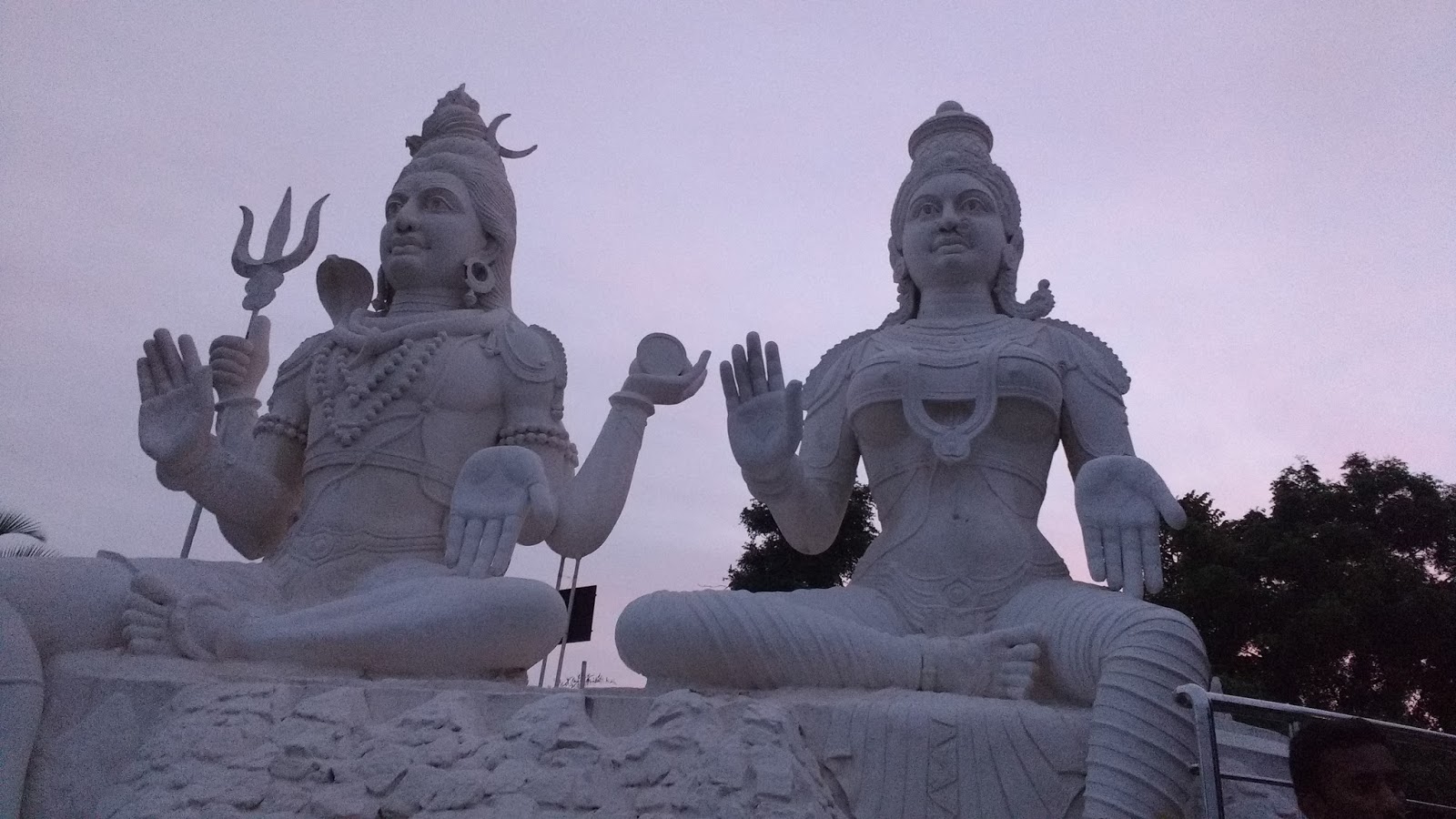
In Vizag, we climbed the Kailasagiri hill, went around the port city and took a long ride on the beautiful and picturesque beach-road. Inhabited by conscious, young and old citizens and bathed by lovely weather, the city of Vizag is well-organized and very clean. During our visit, everything fell on line and we enjoyed the trip. We bought some interesting eatables and rare mementos. It was truly a refreshing trip.


D. Jayarama Bhat 


Sunday, 31 July 2016

Prof. (Dr.) Ram Dayal (1930-2016): An Obituary

Dr. Ram Dayal (born in 1930), formerly Professor & Head, Department of Mycology & Plant Pathology, Institute of Agriculture Sciences, Banaras Hindu University, Varanasi, and a researcher, writer, dedicated mycologist and above all a teacher of high repute, breathed his last on Friday, 29/07/2016, morning at 3:30 am at his residence in Varanasi, after a brief illness.
Graduated from University of Allahabad and worked under the guidance of late Prof. R.K. Saksena, a distinguished mycologist of international repute, University of Allahabad, Dr. Ram Dayal worked primarily on biology and taxonomy of lower fungi with special reference to soil-inhabiting nematophagous fungi. He authored several books, viz. ‘Chytrids of India’, ‘Advances in Zoosporic Fungi’, ‘Zoosporic Fungi of India’ and ‘Introduction to Fungi’. Specialized on soil-inhabiting chitrids and nematode-trapping fungi in agricultural soils, he had published more than 150 research papers in journals of national and international repute. He was the Fellow of National Academy of Sciences (Allahabad) and Life Member of Indian Phytopathological Society and Mycological Society of India.
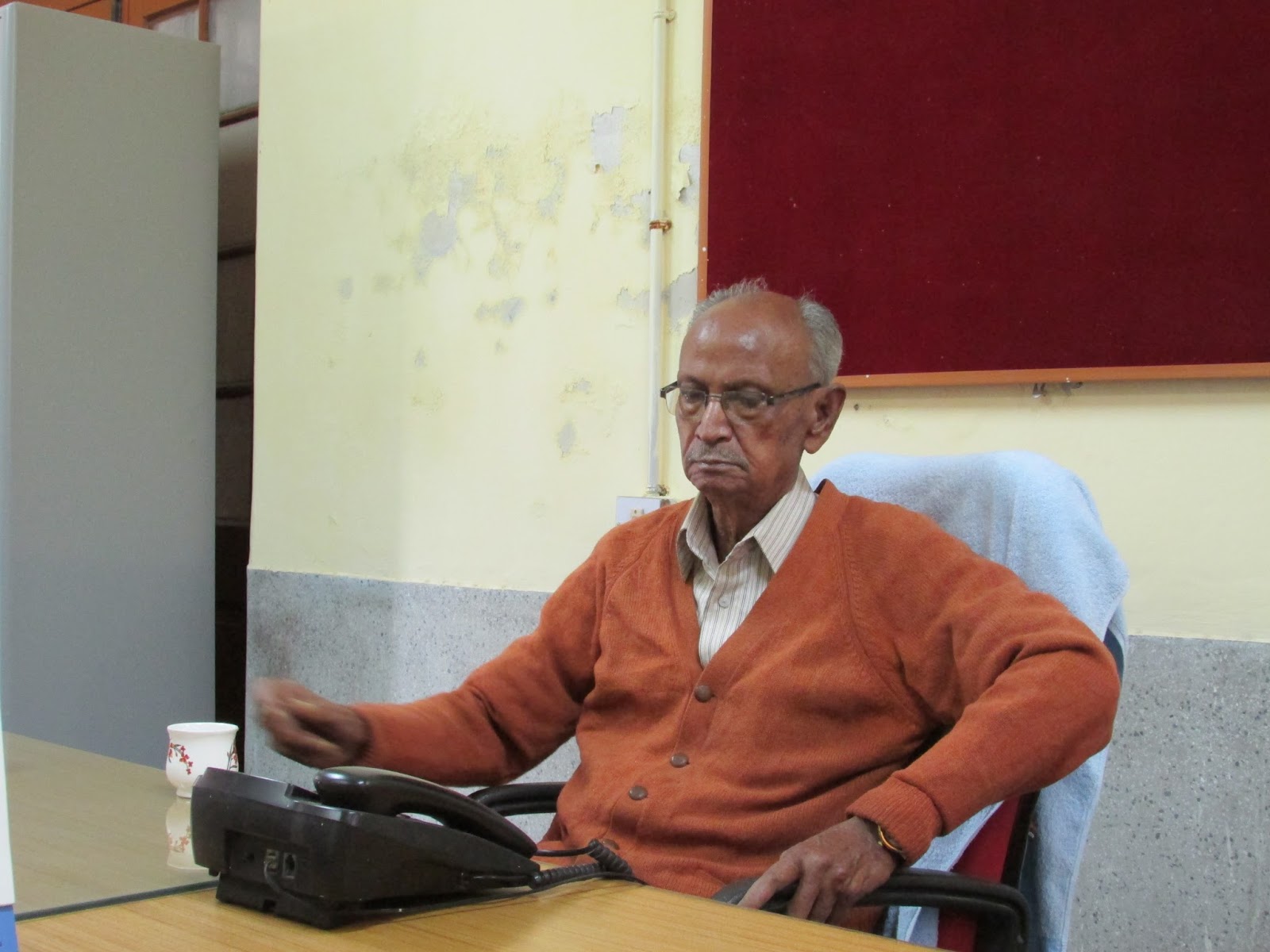
I have known Prof. Ram Dayal, since 2 decades. We had organized a DST-sponsored 10-day duration hands-on workshop on “Techniques in Aquatic Fungi’ at Department of Botany, Goa University, during 1-10 September 1994 and Prof. Ram Dayal was one of the resource persons. A renowned expert on zoosporic soil fungi, he taught the participants everything that he knew during the workshop. Since then, we continued our academic and research interactions and Prof Ram Dayal became a close friend of mine.
He had invited me and my wife to Varanasi which we could accomplish only last year. His former student and presently Professor at the Department of Mycology & Plant Pathology, BHU, Prof. Asha Sinha, organised my visit to Varanasi. I delivered two guest lectures at their Department, in the first week of Nov 2015 and Prof Ram Dayal attended my lectures. It was a moment of immense joy for me. I and my wife visited his residence in Lanka, Varanasi, in the evening. Then at the age of 85, Prof. Dayal was very alert and well-receiving. He was very happy to see us at his place, one of his dreams that he said.
With passing away of Prof. Ram Dayal, we lost a distinguished Indian mycologist and a wonderful human being. I pray Bhagwaan Kashi Vishwanath and Bhagwaan Shri Ram to bless his soul with peace.


D. Jayarama Bhat